
Published in honor of National Higher Education Day, June 6, 2026
National Higher Education Day Hits Different This Year
Saturday, June 6, 2026 is National Higher Education Day, set aside to recognize the role colleges and universities play in shaping students and the workforce. This year the recognition lands in the middle of one of the most turbulent stretches higher ed marketing has ever seen.
How Higher Ed Marketing Has Changed in 20 Years
Found Search Marketing turns 20 this June, and higher ed has been part of our story from the beginning. Back then, recruiting students meant direct mail, college fairs, broad keyword search ads, and brochure-style websites. Targeting was demographic, attribution was rough, and a 'lead' was a form fill.
In 2026, the playing field looks completely different:
- The funnel is wider and noisier. Prospective students touch a dozen channels, researching for months across TikTok, Reddit, YouTube, and AI chat tools before a school enters their consideration set.
- Demographics are shifting. Traditional 18-year-old recruitment pipelines are shrinking while adult learners and online programs drive growth.
- Privacy changed the data game. Cookie deprecation and stricter consent rules have turned first-party data into an institutional asset.
- Platforms got smarter, and more closed. Major ad platforms increasingly favor automated bidding with fewer manual controls.
- Students behave like consumers. They expect Amazon-level personalization and full outcome transparency.
The Current State of Enrollment and Recruitment
Higher education faces real pressure. The Pell Grant program is facing a multi-billion-dollar shortfall, putting financial aid messaging back at the center of recruitment strategy. MBA programs are slashing tuition, for-profit colleges are navigating political scrutiny and AI tools are reshaping how students choose schools.
For higher ed marketers, this translates into a much more discerning prospect, with higher expectations and shorter patience.
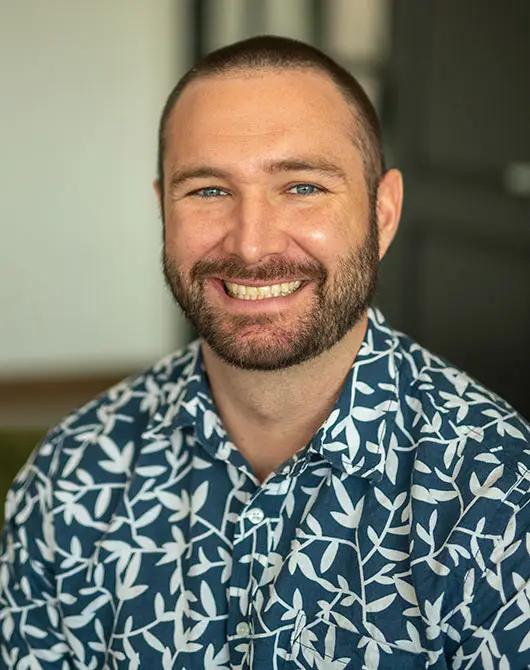
“Prospective students are behaving more like informed consumers than ever before. For our team at Found, that means adapting campaigns around intent signals, simplifying conversion paths, and focusing heavily on performance data so our higher ed clients can connect with the right students at the right time.”
Found's Perspective: It All Comes Down to Signal Quality
Here's the thing we've come to believe after watching this industry for two decades: every disruption that feels new is really the same shift wearing a different costume. Cookie deprecation, the rise of automated bidding, channel fragmentation, AI-assisted search: pull each one apart and you find the same underlying truth. The cleverness of HOW you target matters less every year. The QUALITY OF THE SIGNAL you feed the system matters more.
That's a genuinely different way to run an enrollment marketing program than even a few years ago. The old playbook rewarded marketers who could build the most precise audience by hand. The new one rewards institutions (or brands) that feed the platform the cleanest, most honest data about who actually enrolls, and then gets out of the way.
It's why so much of our work has moved upstream, away from campaign settings and toward measurement: making sure conversion signals survive consent gating, that first-party data actually reaches the platforms, that the model is learning from "this student enrolled" rather than "this person filled out a form." Audience engineering focuses on instructing the algorithm through high-quality conversion signals, precise creative, and first-party data. It teaches AI systems who to find and what to optimize for.
How To Stay Ahead of Platform Shifts & Focus On Student Recruitment
In this evolving landscape, leveraging first-party data is crucial for institutions aiming to connect with prospective students effectively. By employing robust audience engineering techniques, colleges can identify and reach diverse groups, including adult learners and career-switchers, who may not fit traditional profiles. This approach not only enhances targeting precision but also aligns marketing efforts with the nuanced expectations of today's students, ensuring that outreach strategies resonate and engage effectively. The schools winning are the ones treating their marketing programs less like an annual campaign launch and more like a continuous optimization loop. Two habits separate them:
1. Treat signal quality as the actual job. Julie Warnecke, Founder and CEO at Found, elaborated on this in a recent Search Engine Land article, “Why audience engineering is replacing manual targeting in paid media”:
“Algorithms target based on data within their own ecosystems, eliminating the controls we used to rely on. If targeting is now internal to the algorithm, your role changes. It's less about selecting your audience and more about engineering it. Embrace that shift by optimizing conversion signals, refining creative, and strengthening your data infrastructure.”

Institutions that invest in accurate, complete data pipelines will see the biggest gains. In practice that's unglamorous infrastructure work (deeper conversion events, server-side measurement that holds up under consent rules) that occurs BEFORE anyone argues about bid strategy. We have found it's the work most often skipped.
2. Remain curious and challenge assumptions about your audience. When marketers rely on historical “ideal student” profiles, sampling bias can unintentionally create an infinite loop of self-reinforcement issues. This puts campaigns at risk for overrepresenting those segments and overlooking emerging groups that don't fit the ideal student profile. Audience engineering is your competitive advantage.
We saw this with one of our higher ed clients, whose historical performance data had long guided program-level targeting. When Advantage+ Audiences were integrated, this reinforcement loop was disrupted, allowing the platform's machine learning to explore a new audience beyond the legacy student archetype. The audience was always there. The old data just couldn't see it.
It's a real shift in how Meta wants advertisers to run campaigns, and it's happening across every channel right now. All of them are pushing more decisions into the algorithm and asking advertisers for cleaner audience inputs in return.
“In higher ed especially, success comes from understanding audience behavior, leaning into stronger first-party data inputs, adapting quickly to changing trends, and staying focused on outcomes that truly impact enrollment.”
— Adam Persinger, Head of Strategic Media, Found
The Bottom Line
National Higher Education Day is a chance to celebrate the institutions doing the work of educating the next generation. For the marketing teams behind those institutions, it's also a useful checkpoint. The students you're trying to reach are smarter, faster, and more skeptical than ever. The platforms you're using are more automated and less forgiving. And the cost of standing still keeps going up.
Looking to elevate your higher ed marketing with advanced data engineering and paid media expertise? Let's talk.